By Hector Camaton ’28
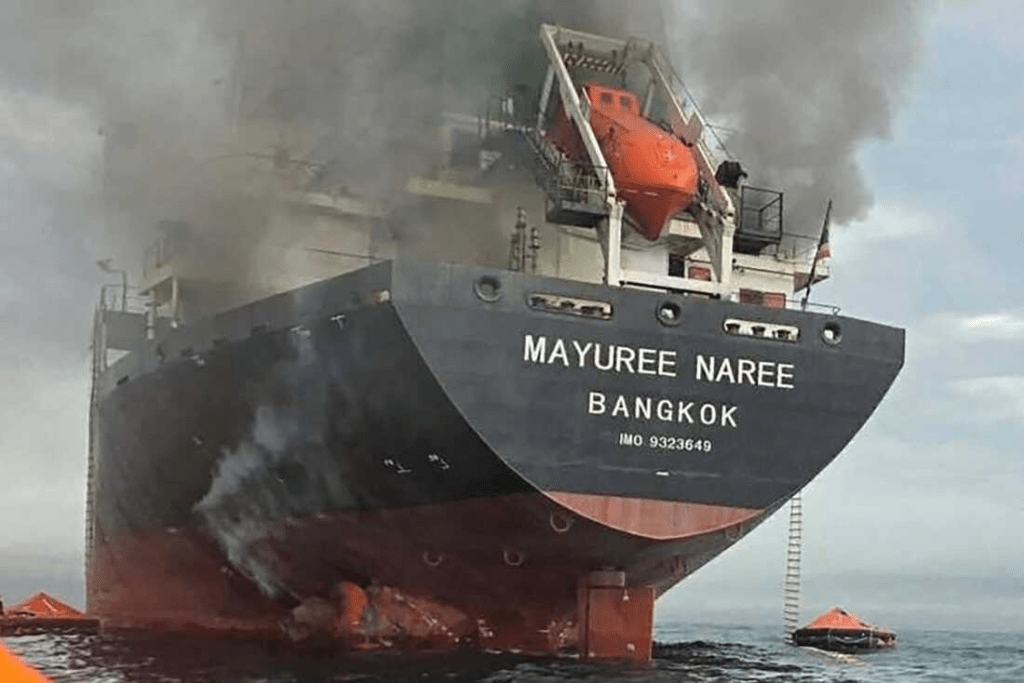
Modern geopolitical tensions have evolved with complexity to confront war not just with missiles but also with markets. The Strait of Hormuz, a narrow stretch of water south of Iran, is hemorrhaging global energy markets as shipping collapses amid the escalating conflict between the United States, Israel, and Iran.
In recent days, commercial tanker traffic through the strait has slowed dramatically. Shipping companies, insurers, and energy traders are retreating from the strait, as it becomes one of the most dangerous maritime passageways in the world. Roughly 20 million barrels of oil, about one-fifth of global petroleum consumption, normally pass through the strait each day, concurrently making it the most important energy chokepoint in the global economy. Oil prices have already surged past $100 per barrel as the conflict threatens global production and shipping. The ongoing geopolitical conflict, which started as a military confrontation, is now rapidly turning into an economic shock, showing how the modern economy can rely on a single route.
Energy markets will gradually continue to face risk; disruptions to the Persian Gulf threaten several of the world’s largest oil producers, including Saudi Arabia, Iraq, Kuwait, and the United Arab Emirates. For decades, the Strait of Hormuz has linked Middle Eastern production to markets across Asia, Europe, and beyond. However, the majority of oil transported through the strait is destined for Asian economies that are, unfortunately, not directly involved in the conflict. The U.S. EIA lists China, India, Japan, and South Korea, among others, as being at risk. This sharp concentration means that even temporary disruptions can pose a threat to global supply chains, raising transportation costs, destabilizing financial markets, and fueling inflation.
Oil prices rose quickly as traders began to price in the possibility of prolonged disruptions to Gulf oil shipments. Some shipping lines have also begun to route their ships around the region as well as increased premiums to insure tankers that travel through the Persian Gulf. This type of adjustment demonstrates how global energy distribution patterns may be impacted by the risk of instability in the straits even if actual supply has not been impacted.
Governments around the world are preparing for potential supply shocks. Many countries have strategically built oil storage facilities to maintain stability in the event of an interruption in oil flows into global markets. Import-dependent countries may draw upon strategic petroleum reserves to stabilize supply if disruptions persist. The oil-producing countries of the Gulf region will attempt to increase oil production to offset shortages; however, it takes time to make such increases, and they rarely replace lost supply immediately.
The responses of governments around the world reflect the much larger vulnerability of a global energy system that depends on a single, very narrow waterway remaining unobstructed.
Beyond the initial impact on the world’s oil markets, protracted instability in the Strait of Hormuz can create additional pressure on the world’s economies. Oil prices are a factor beyond just the cost of fuel, influencing transportation costs, the cost of materials used in manufacturing and the cost of goods moving throughout the world’s supply chain. In periods when oil prices increase rapidly, companies that utilize shipping, airlines and other forms of industrial production frequently experience increased operational costs which can ultimately be passed along to consumers.
Financial markets have historically reacted swiftly to disruptions in energy supplies. As investors perceive increases in oil prices as indicators of broader geopolitical risks, financial market volatility can occur in equity markets, currency markets and commodity markets. Additionally, for countries whose central banks are currently attempting to balance economic growth and inflation, prolonged increases in the cost of energy can create new inflationary pressures which can further complicate monetary policy decisions and slow economic recovery in several regions.
The most plausible result of ongoing tensions surrounding the Strait of Hormuz will be an extended period of fluctuation in energy markets rather than a full disruption of global oil shipments. Even limited disruptions can continue to support high levels of crude oil prices as traders incorporate geopolitical risks into their assessments of global oil supplies. For countries that are large consumers of imported energy, especially for those that rely heavily upon oil from the Middle East, sustained uncertainty in oil pricing could lead to higher freight costs, inflationary pressures and lower output for industries that use crude oil or refined products.
On the other hand, the current crisis is likely to accelerate long-term changes in the overall global energy strategy. Governments and businesses may pursue strategies that increase the diversity of their supply chain; enhance strategic petroleum reserve stockpiles; and invest in alternative forms of energy to improve their dependence on oil from vulnerable chokepoints such as the Strait of Hormuz. Although the conflict itself has been confined to a single region, it is the broader ramifications of this conflict that illustrate a key characteristic of the contemporary global economy. That is, when there is instability in a single maritime channel, it can produce ripple effects throughout markets, supply lines, and government economic policy-making processes worldwide.
Contributor: Emily Villa ’27
Photo Credit: Handout/Royal Thai Navy/AFP/Getty Images
 Stanford Political Review
Leave a comment