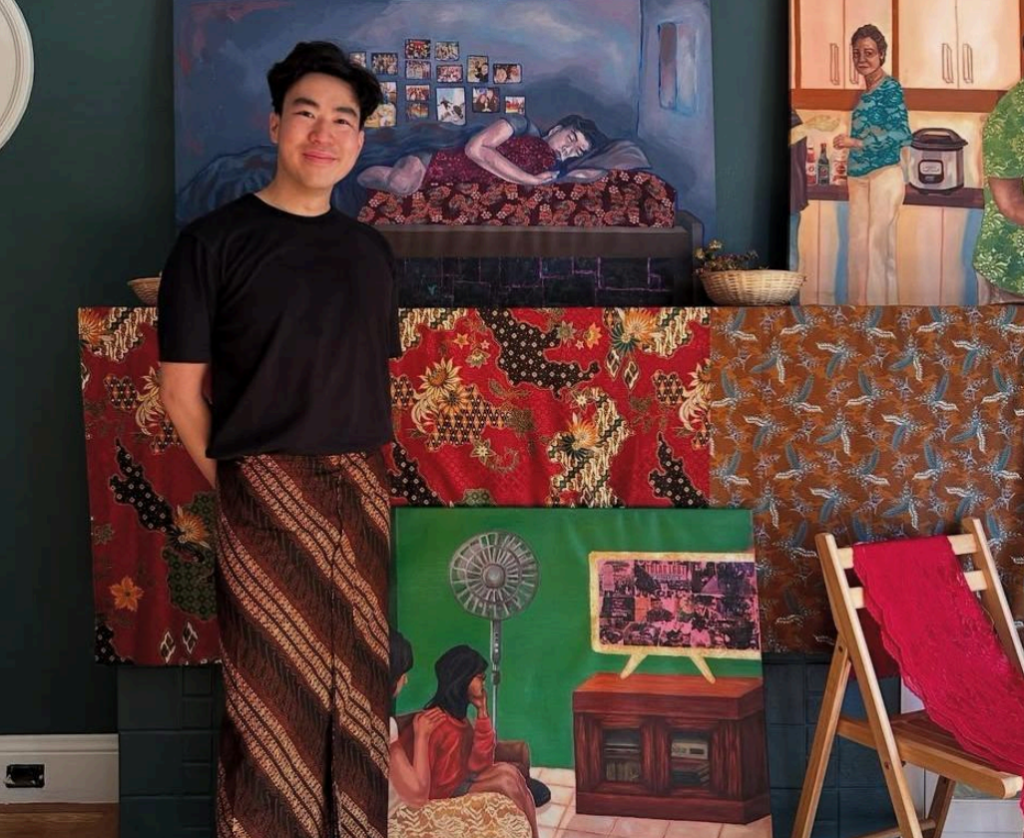
By Anagali Duncan ’26
The following piece is an interview with Bryan Defjan ‘25, preceded by his artist statement.
Full Artist Statement
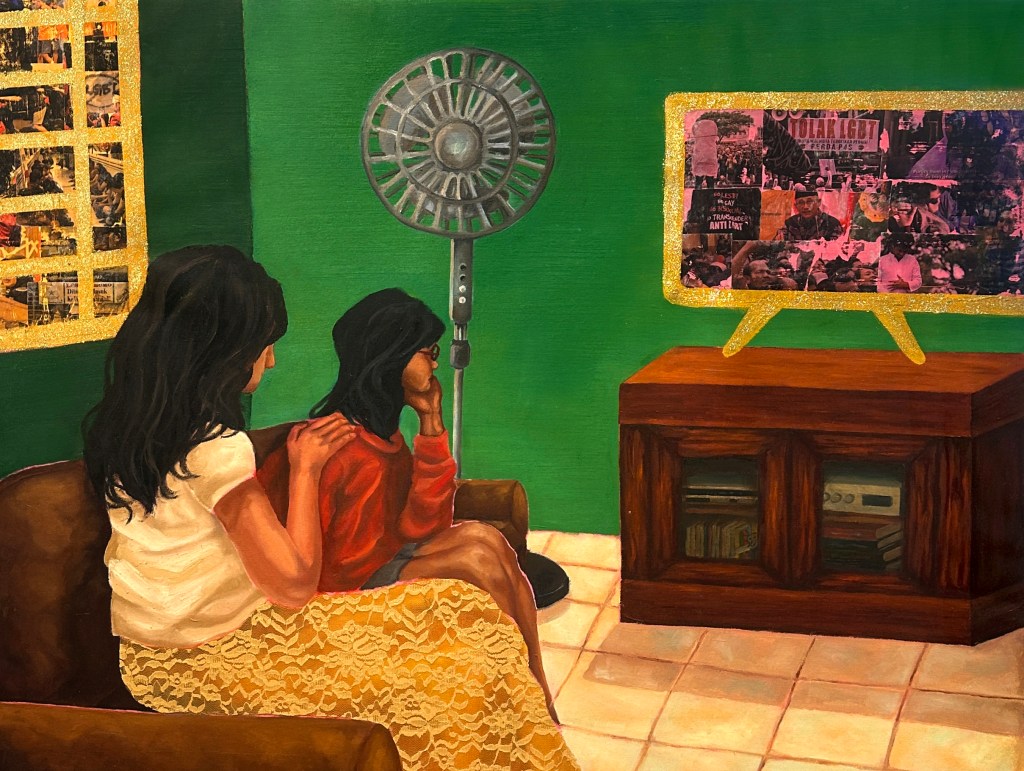
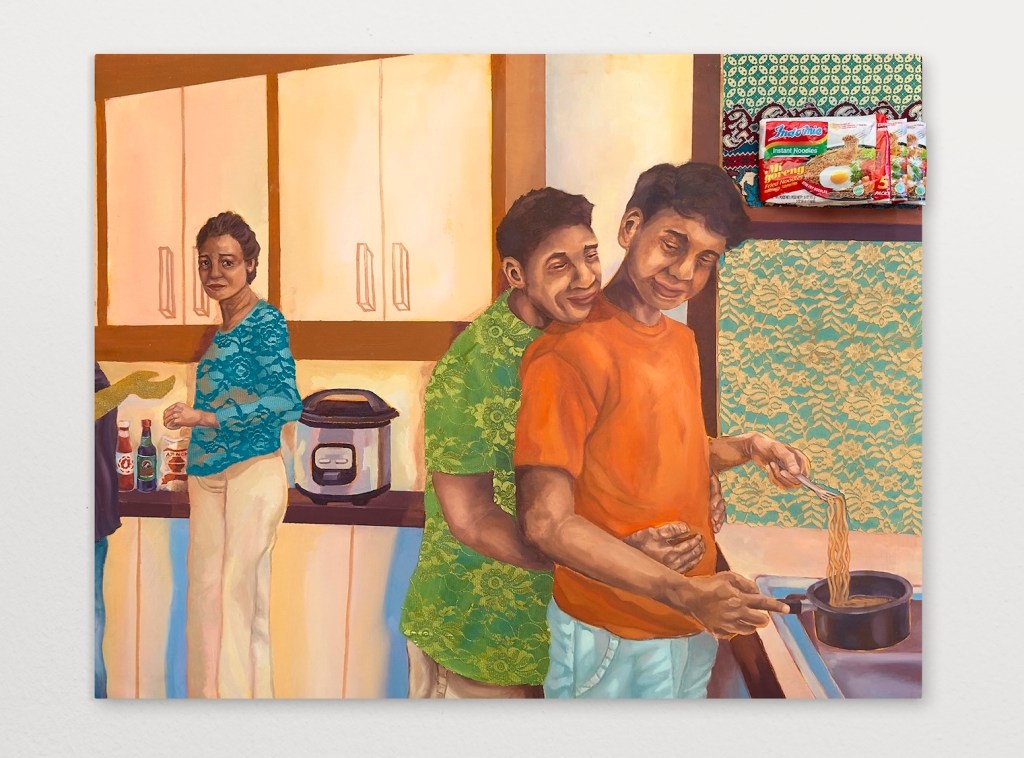
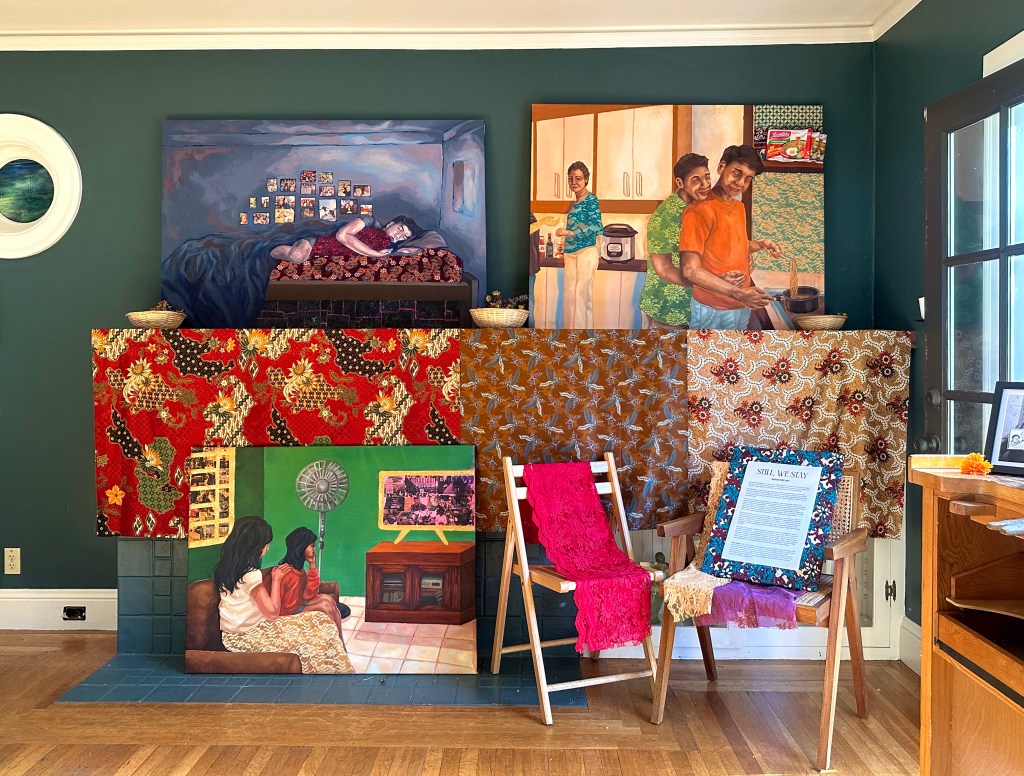
Sometimes the television is on, but no one is really watching. Two lovers sit on the couch, holding each other a little closer than the day before. In the kitchen, steam rises from a pot of noodles, and someone’s mother lingers in the doorway. A love that does not always know what to say.
Still, We Stay is a narrative series that centers queer Indonesian domestic life as a site of quiet resistance. Visibility often feels dangerous in a country where queerness is ostracized, but invisibility becomes its own kind of loss. According to a 2023 Pew survey, 92% of Indonesians opposed same-sex civil partnerships, among the highest rates in the world. Today, anti-LGBTQ+ rhetoric is used to gain political favor.
Now living abroad, I often wonder where I belong in this landscape. Rather than depict the courageous activism others in my community take on, I turn inward. These paintings are imagined interiors—snapshots of daily life where tenderness survives in spite of everything. I draw from the textures of my own upbringing and the shared histories of queer Indonesians. Each scene is rendered in vibrant oil and layered with traditional batik and kebaya lace, materials that carry both cultural memory and gendered symbolism. Glitter is not used for spectacle, but to subvert: coating sites of pain and oppression and reclaiming them through shimmer.
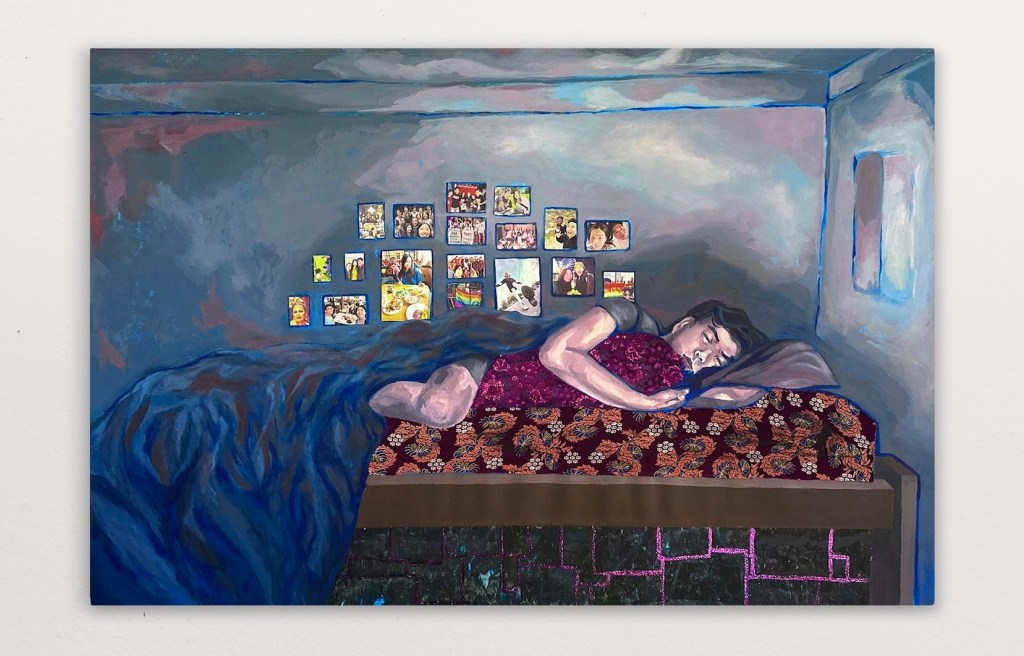
The domestic setting serves as a narrative stage. In one living room, a couple holds each other as a TV blares homophobic news; windows and screens are collaged with image transfers of headlines and political declarations. In the kitchen, two young men cook together, one embracing the other from behind as a mother looks on, her face touched by familial care and by the bittersweet ache of not fully understanding. In the bedroom, I lie tensely in bed above a muddied collage of fear and internalized violence, while a constellation of postcards behind me bear joyful snapshots of loved ones in whom I find kinship and possibility.
This series is a love letter to the queer Indonesian community, both local and diasporic. It is also a personal act of witnessing—for the version of me that couldn’t speak, and for those who still can’t. This year, I have come to understand that pain and joy are not opposites. They can co-exist in the body without needing to cancel each other out. So even when the subject is heavy, I refuse to strip the color from my canvas. I want to blur the lines between what hurts and what heals. I believe resistance doesn’t always have to be loud. Sometimes it looks like staying in. Sometimes it looks like making dinner. Sometimes, it’s just staying soft when the world tells you to harden. Still, we stay.
The content below features questions asked to Bryan Defjan by the Senior Editor of Creative Currents, Anagali Duncan. In the interview, Defjan gives his perspective on the intersection between invisibility and politics while emphasizing the importance of considering the political atmosphere when creating artwork.
Duncan: How do you see your art as a form of political expression or resistance?
Defjan: I feel uncertain about calling my work political because it always begins as a personal reflection on identity, memory, and belonging. But I’ve realized that making work about queer life is inherently political. Visibility can be risky sometimes, so even depicting tenderness becomes an act of resistance. Growing up, I learned what could and couldn’t be said, what kinds of love were allowed to exist in the open. Now that I live abroad, I sometimes question my legitimacy in representing community from the diaspora, but I still feel shaped by that tension between safety and truth, and through that, I feel connected to those at home who share my identity.
Duncan: In what ways does your creative process respond to current political or social issues?
Defjan: My process metabolizes the atmosphere that current events create. When anti-LGBTQ rhetoric dominates the news or politicians use queerness as a scapegoat, I think about how fear and anger seep into ordinary spaces like dinner tables and daily conversations. Politics often flattens identities into moral binaries: if you’re queer, you can’t be this or that. I layer traditional Indonesian fabric like batik and kebaya lace to explore how queerness and cultural heritage can coexist. They can simultaneously carry love, community, and the weight of expectations.
Duncan: Do you believe art can change politics — or does politics change art?
Defjan: I think it’s a loop. Politics shapes the conditions we create within, like what can be said and who can be seen. Art shapes how people feel about those conditions. I’m less interested in art that tells people what to believe, and more in art that makes someone pause and care about, or at least listen to, a perspective they hadn’t considered before. When we start to care about someone’s story, politics inevitably follow.
Duncan: What role do you think artists play in shaping public discourse or community healing?
Defjan: Something I find really beautiful about art is that everyone has a unique way of joining in the conversation. Whether that’s through painting, writing, sculpture, dance, film, or performance, I feel like artists translate emotion into form. We’re all looking to turn something unspeakable into something we can hold. In times of collective pain, artists help us see each other again. Over the past year or so, painting has become a form of care for me.
Artist Bio
Bryan Defjan (b. 2001, Jakarta, Indonesia) is a figurative painter and designer whose work blends humor and vulnerability to explore queerness, masculinity, and cultural belonging. He weaves personal memory with shared history to create introspective scenes that feel quietly resistant. Navigating the tension between visibility and intimacy, Bryan’s paintings confront the weight of cultural expectations while carving space for tenderness. Outside the studio, he enjoys figure skating and musical theater, and has a particular fondness for midcentury modern furniture.
Contributors: Alexander Kim ’28 and Emily Villa ’27
 Stanford Political Review
Leave a comment